
Café POS
A café system that knows how much coffee and milk each cup uses
A fast cashier for drinks and their options, recipes that consume coffee, milk and cups from stock, and counts that reveal waste.
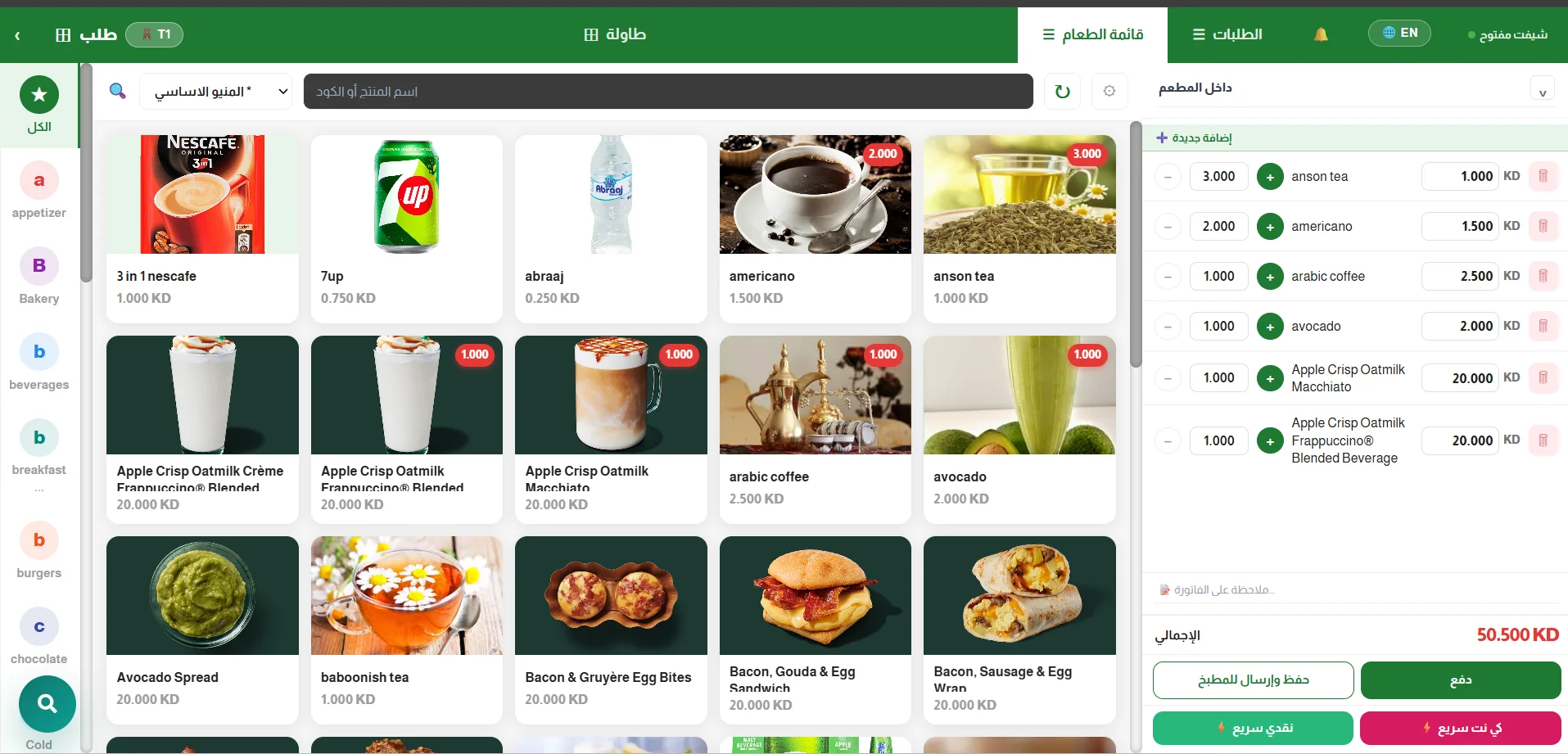
A café’s margin depends on small details: grams of coffee per cup, wasted milk, and cups handed out without a sale. When the recipe is in the system, expected stock usage becomes clear, and the gap shows in the count.
Drink options that affect the recipe
Size, milk type and an extra shot are one-tap options; each can change the price and the ingredients consumed.
A recipe for each drink
Define each drink’s ingredients and quantities, so a sale consumes coffee, milk, cup and lid from stock, and you know a cup’s cost before pricing it.
Bar stock counts
Count coffee and milk at the end of the week and compare with what sales say should be left. The gap points to waste or unrecorded drinks.
Speed at peak hour
Best-selling drinks on the first screen, instant KNET payment, and the bar ticket printing on save.
How to start in KEMET
- Record the main ingredients and their units
- Create a recipe for each core drink
- Link size and milk options to recipes
- Compare the weekly count with expected usage
An example from a restaurant
A café sells 120 lattes a day. The recipe says 18 g of coffee per cup, so 2.16 kg a day is expected. The weekly count shows 10% more usage, and the owner finds the grinders are not calibrated.
Common questions
Are recipes mandatory?
No. You can start with sales only and add recipes gradually for your best-selling drinks.
Does it calculate the cost per cup?
Yes, from the ingredient cost in the recipe, so you can compare it with the selling price.
Does it suit a café chain?
Yes. Each branch has its own stock and menu, with combined reports and stock transfers between branches.
Want to see it on your restaurant?
We show you the system on your own restaurant and help you choose the right plan and devices for your branches.